In Antarctica, a frozen vault holds the secrets of the world’s vanishing glaciers
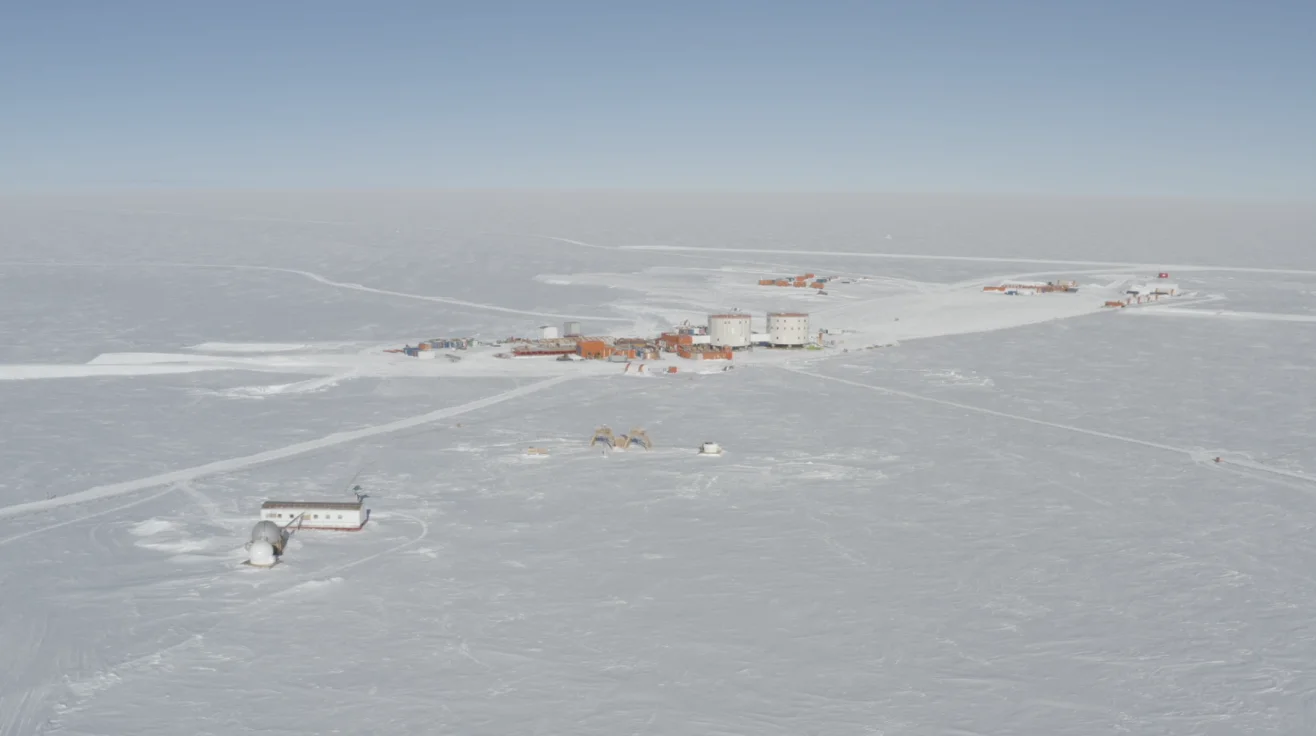
Beneath Antarctica’s endless white plateau, hidden deep within the snow, lies a priceless archive of the world’s climate memory.
The vault is not made of steel or concrete. There are no security systems or humming freezers. Instead, the sanctuary is carved directly into the Antarctic snow near Concordia Research Station, a remote Franco-Italian outpost more than 1,000 kilometers (620 miles) from the nearest coastline.
Inside the frozen cave, scientists are storing cylinders of ancient ice extracted from some of the world’s most endangered mountain glaciers. Within the ice are records of past climate history — from volcanic eruptions and wildfire smoke to industrial pollution and shifting atmospheric conditions stretching back centuries, sometimes millennia.
The project, led by the Ice Memory Foundation, aims to preserve pieces of these glaciers before rising temperatures erase them.
“It’s a unique location. It’s a unique idea. It’s really a first in many aspects,” Thomas Stocker, president of the foundation and professor of climate and environmental physics at the University of Bern, Switzerland, told CNN.
“We cannot save the entire glacier, but we can save the environmental and climate information that is stored in these glaciers.”
That information is preserved in microscopic air bubbles trapped inside the ice. “These bubbles are full of atmospheric air from the time this bubble was formed — maybe a hundred years, a thousand years, a million years back in time,” he said.
Scientists can analyze those bubbles to reconstruct historical concentrations of carbon dioxide, methane and other greenhouse gases. Stocker said ice core records have revealed that today’s carbon dioxide levels are 30% to 35% higher than at any point in the last 800,000 years. But records containing other important information are fading away.
“I’m living in Switzerland, so we have observed for many decades that the glaciers are retreating at an accelerating pace,” he said. “The local climate archives, such as in Alpine glaciers or in glaciers in the Himalayas or in the Andes, are disappearing at an alarmingly accelerating rate.”
Globally, thousands of glaciers have disappeared in recent decades and by the middle of the century, up to 4,000 glaciers could vanish each year if humans continue to drive climate change, according to a 2025 study. Roughly a decade ago, as the scale of glacier loss became increasingly clear, scientists developed the idea for the Ice Memory archives. Since then, teams have traveled around the world drilling and transporting fragile cores to Antarctica, where the continent’s natural cold can preserve them for centuries.
Collecting the cores
Collecting and transporting the samples to Antarctica while keeping them frozen and uncontaminated is a complex task that often requires expeditions into some of Earth’s harshest environments.
Scientists haul nearly 1,000 pounds of drilling equipment onto high-altitude terrain. In Tajikistan, one recent drilling campaign took place at 5,820 meters (19,094 feet) above sea level.
“You can imagine how difficult the working conditions for the drillers and the scientists who went there must have been,” Stocker said.
A cylindrical drill fitted with ring-shaped cutters bores into the glacier, extracting a vertical core of ice layer by layer. The deeper the core, the older the climate history it contains.
But before any drilling begins, scientists spend months surveying glaciers using ground-penetrating radar to identify the most stable locations, where the internal ice layers remain undisturbed.
“When we do this radar survey, it’s basically like looking at a photograph of the whole internal structure of the ice, from your feet, all the way to the bedrock interface below,” Alison Criscitiello, director of the Canadian Ice Core Lab at the University of Alberta, who’s not involved with the Ice Memory Foundation, told CNN.
An international network of scientists and institutions has spent decades collecting, storing and studying ice cores from glaciers and polar ice sheets around the world.
“There are places on the planet with critical climate records that are being lost every single day,” she said. “Every day that goes by where melt is occurring in these kinds of places, more time is lost from that climate record.”
Organizations including the National Snow and Ice Data Center at the University of Colorado Boulder in the US, the British Antarctic Survey, the Alfred Wegener Institute in Germany and the French National Center for Scientific Research (CNRS) maintain vast archives of frozen samples drilled from Antarctica, Greenland and mountain glaciers. International collaborations such as the European Project for Ice Coring in Antarctica (EPICA) and Beyond EPICA have used these cores to reconstruct Earth’s climate history stretching back hundreds of thousands of years.
But while most ice-core research has focused on understanding past climate change, the Ice Memory Foundation adds a new dimension: preserving an archive of endangered glaciers before they vanish.
Ice cave
Scientists chose the area near Concordia Research Station precisely because temperatures there remain low enough for ice cores to be preserved naturally, without the need for complex refrigeration systems.
Sitting high on the Antarctic plateau at more than 3,000 meters (9,800 feet) above sea level, Concordia is one of the coldest and most isolated research stations on Earth. During the Antarctic winter, temperatures can plunge below minus 80 degrees Celsius (minus 112 Fahrenheit), and the station is cut off from the outside world for months at a time.
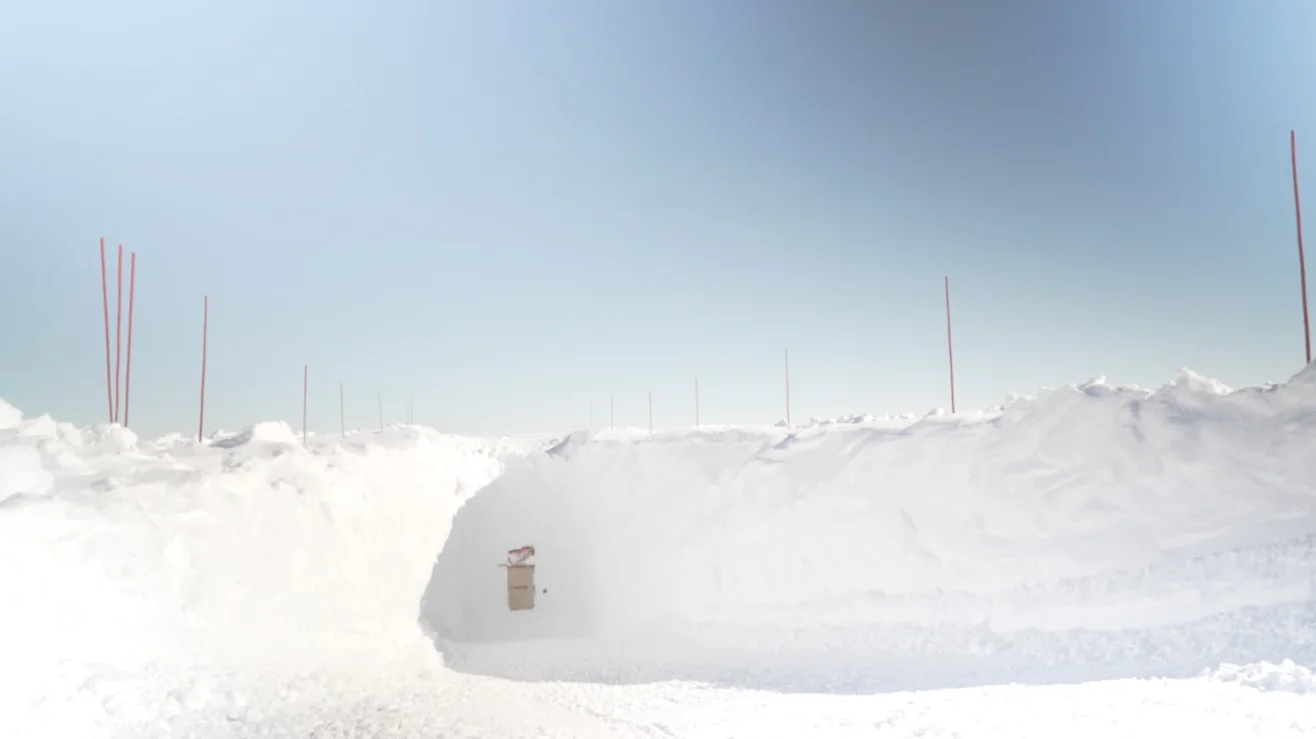
“This is really a safe place. We make it even safer by carving out a cave that is 10 meters (33 feet) below the surface,” Stocker said. “At that cave, in that location, we have this constant minus 52 degrees Celsius (minus 61.6 degrees Fahrenheit). The cave is protected by a snow cover; it’s essentially a vault, but it’s made out of compacted snow.”
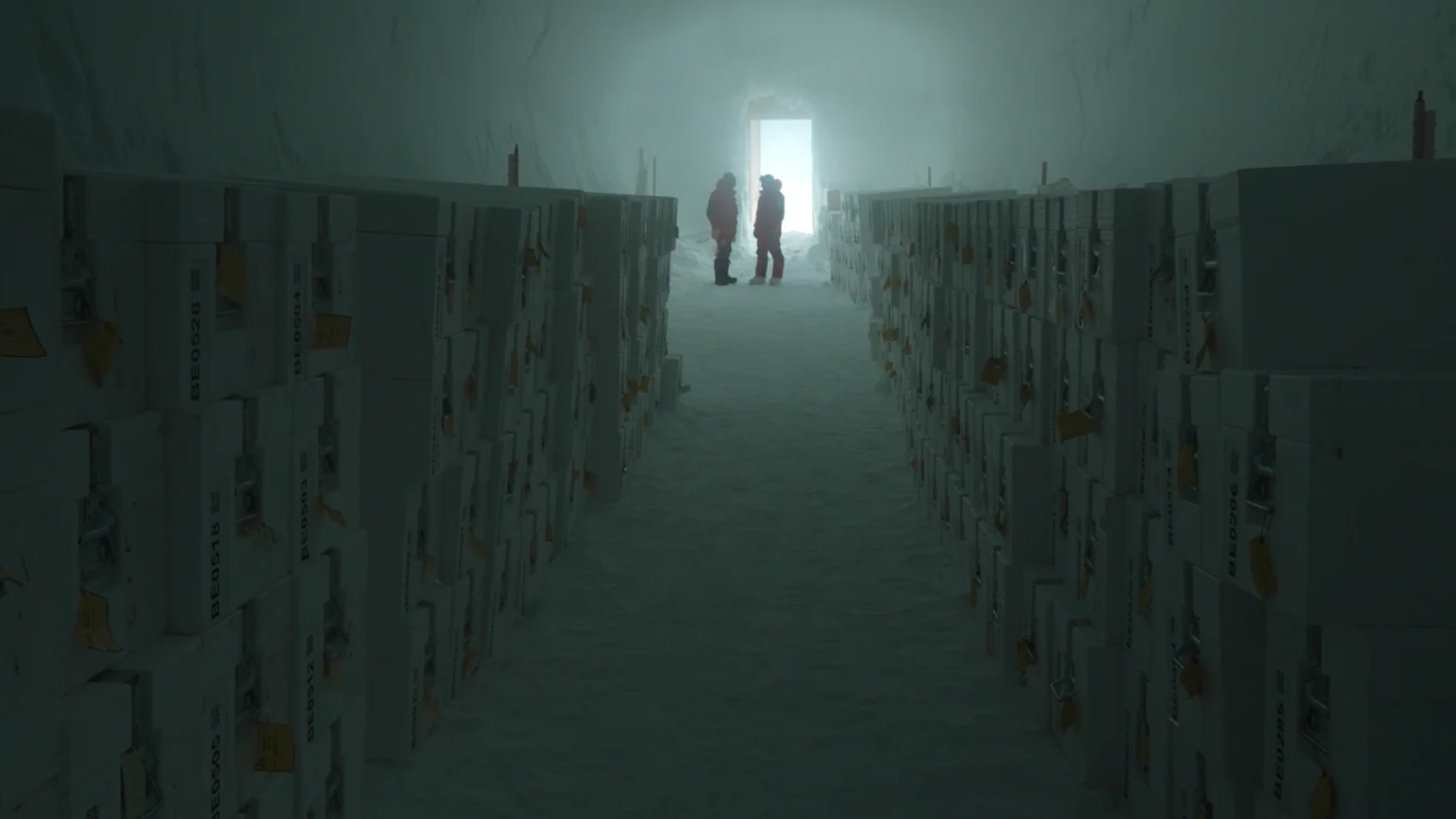
During construction, a trench was excavated and an inflatable balloon placed inside to hold the space for the vault while scientists compacted snow around it. Once the structure was secured, the balloon was removed, leaving behind a finished tunnel-like cave that stretches 60 meters (197 feet) long and 5 meters (16 feet) wide.
Inside the vault, the cylindrical ice cores are stored in white insulated containers, stacked in long rows, with each one carefully labeled.
The foundation aims to preserve ice cores from 20 glaciers around the world. Ten have already been drilled, including cores from the Alps, the Andes and the Pamir Mountains in Tajikistan.
“Ice cores contain global climate information, so there are certain things that every single ice core on Earth will contain,” Criscitiello said. “But ice cores also contain an enormous wealth of very local climate information.”
That information includes data on wildfire activity, environmental contamination, monsoon systems and regional water supplies. “These are climate records that will not exist anymore,” Criscitiello said.
Future generations
Stocker said Switzerland’s glaciers have already lost roughly 35% of their volume, with projections suggesting that up to 90% of low-lying glaciers could disappear by the end of the century in a high- emissions scenario.
The value of the ice cores archived today will continue to grow, as future generations expand the limits of current technology, Stocker said.
“We can measure things today that we never imagined 50 years ago,” he said. “So we believe that in about 50 years or 100 years from now, the next generations of scientists will be able to extract totally new information from these ice cores that we preserve for them today.”